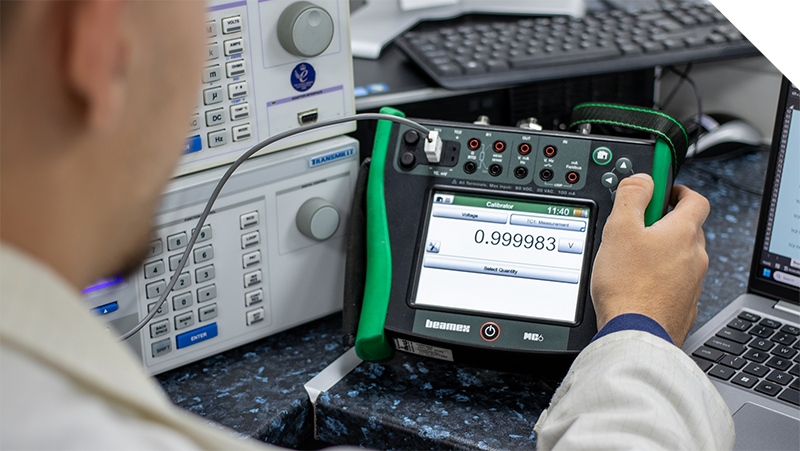
Regulatory Pressure: ISO/IEC 17025 & Traceability Expectations

Calibration and metrology laboratories in Pakistan operate under direct and continuous accreditation pressure. Unlike many testing environments, calibration results are only considered valid if the laboratory can prove traceability, control, and competence at every step. This page explains what ISO/IEC 17025 assessors actually evaluate, why audits feel high-risk, and where laboratories typically struggle to meet expectations.

What ISO/IEC 17025 Really Evaluates

ISO/IEC 17025 is not a checklist of calculations or certificates. Assessors evaluate whether a laboratory has systematic control over measurement activities.

During assessments, auditors look for evidence that the lab can consistently demonstrate:

  • Control over instruments and reference standards
  • Verified environmental conditions during calibration
  • Competence of personnel performing each activity
  • Reliable documentation supporting every reported value

The underlying question assessors ask is:

“Can this laboratory defend this calibration result months or years later, without relying on memory?”
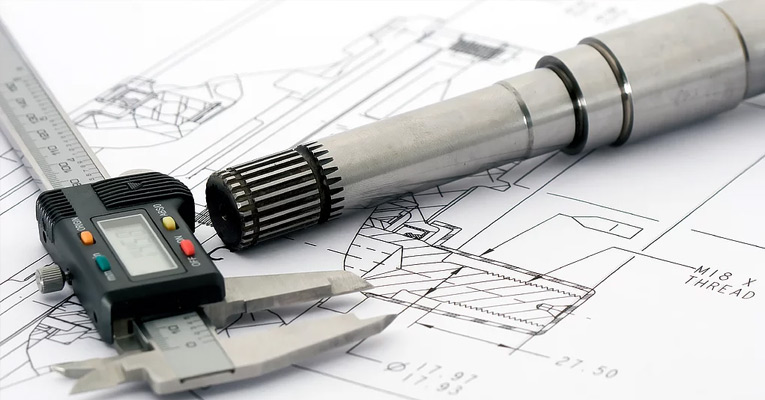
Traceability Is a Mandatory Control Requirement

Traceability is the foundation of calibration work. ISO/IEC 17025 requires laboratories to demonstrate an unbroken chain of traceability from the instrument under calibration to national or international standards.

Assessors expect:
  • Clear identification of reference standards used
  • Valid calibration status of those references at the time of use
  • Documented linkage between the job, the reference, and the result

If traceability documentation is fragmented or reconstructed retrospectively, assessors treat it as non-compliant, regardless of technical accuracy.

Environmental Conditions as Audit Evidence

For many calibration disciplines especially dimensional, mass, and thermal environmental conditions are not optional. Auditors expect laboratories to demonstrate:

  • Monitoring of temperature and humidity
  • Defined acceptable ranges
  • Evidence that conditions were compliant during calibration

When environmental logs are stored separately from job records, laboratories struggle to prove compliance under audit questioning.

Measurement Uncertainty Under Scrutiny

Assessors place significant emphasis on:
  • Correct uncertainty estimation
  • Consistent calculation methods
  • Documentation supporting uncertainty components
Common audit concerns include:
  • Spreadsheet-based calculations without version control
  • Technician-specific methods
  • Unclear linkage between uncertainty values and calibration results
Risk of premature implementation

Uncertainty weaknesses are often cited as major or repeated non-conformances.

Competence, Authorization, and Accountability

ISO/IEC 17025 requires laboratories to clearly define:
  • Who is competent to perform specific calibrations
  • Who reviews and approves calibration results
  • How changes and corrections are authorized
Auditors expect laboratories to answer:
  • Who performed this calibration?
  • Who reviewed it?
  • Who approved the certificate?
  • What changed, and why?

Informal approvals or undocumented changes weaken audit defensibility.

Why Auditors Focus on Process, Not Results

Assessors prioritize process control and documentation integrity because:
  • A controlled process produces reliable measurements consistently
  • An uncontrolled process may produce correct results by coincidence

Even technically sound measurements lose credibility if the laboratory cannot demonstrate control over how they were produced.

Consequences of Non-Compliance

Failure to meet ISO/IEC 17025 expectations can lead to:

In most cases, findings relate to documentation and traceability gaps, not incorrect measurements.

     Major or minor non-conformances

     Suspension or reduction of accreditation scope

     Increased surveillance or re-assessment

     Loss of client confidence and international acceptance

Regulatory Pressure Summary

For calibration and metrology laboratories in Pakistan, ISO/IEC 17025 compliance is fundamentally about traceability, control, and accountability. Accreditation success depends on the laboratory’s ability to demonstrate systematic governance over calibration activities, not just correct numerical results.